Many Iranian companies need two audiences at once: Persian-speaking customers at home and English-speaking partners, buyers or investors abroad. A bilingual website is the obvious answer, but Persian and English differ in direction, script and search habits. Done carelessly, one language ends up as a broken mirror of the other.
1. Design for right-to-left from the start
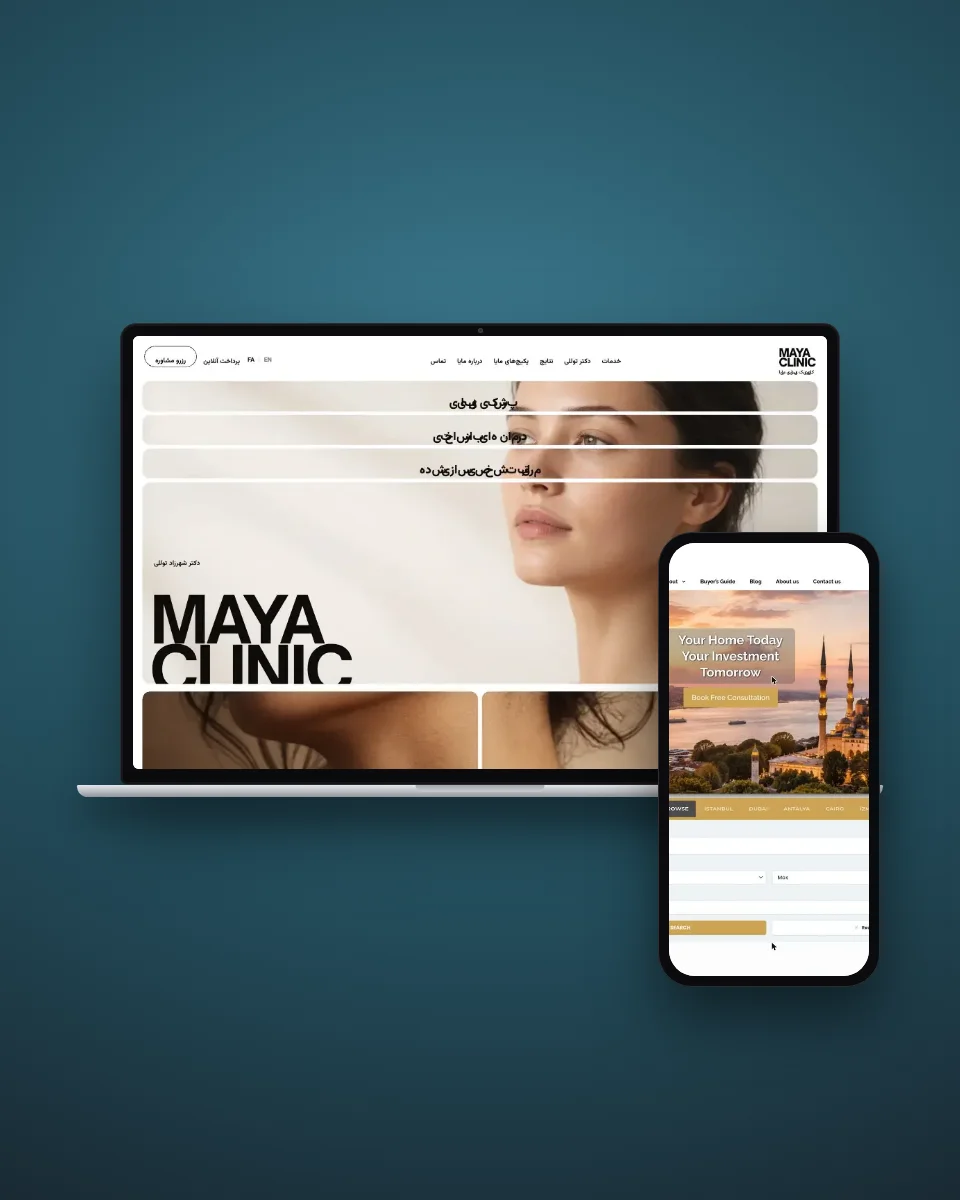
Persian reads right to left. That affects far more than text alignment: navigation order, arrows, icons that imply direction, sliders, form layouts and even where the eye lands first all flip. A site designed in English and then "mirrored" usually has small breakages everywhere, such as arrows pointing the wrong way or padding on the wrong side.
Build both directions into the design system from day one: set dir="rtl" and lang="fa" on Persian pages, use logical CSS properties (start and end rather than left and right), and check every component in both directions before launch.
2. Fonts, digits and the small things
- Fonts. Choose a Persian typeface designed for screens, and pair it with a Latin font of similar weight so mixed lines look even.
- Digits. Persian pages read better with Persian digits (۱۲۳) in text. Phone numbers inside links can stay in Latin digits for compatibility.
- Dates. Persian readers expect the Solar Hijri calendar (for example ۱ آذر ۱۴۰۵); English readers expect the Gregorian date.
- Mixed text. English brand names inside Persian sentences can jump around visually. Test real copy, not placeholder text.
- Half-spaces. Persian uses the zero-width non-joiner (نیمفاصله) in words such as «میشود». Copy pasted from other tools often loses it, and the text looks careless.
3. One URL per language
Each language needs its own address, for example example.com/services/ and example.com/fa/services/. Search engines index URLs, not language switches. If the language changes only through a script or a cookie on the same address, one version stays invisible to Google.
Subfolders such as /fa/ are usually the simplest choice: one domain, one site to maintain, and all the authority built up by the domain shared by both languages.
4. Hreflang, done properly
When the same page exists in both languages, hreflang tags tell Google which version to show to which reader. The rules are strict:
- Every page lists both versions, including itself.
- The tags point both ways: if the English page names the Persian one, the Persian page must name the English one.
- Add an
x-defaultfor visitors whose language isn't covered. - Only pair pages that really are versions of each other. A Persian article with no English counterpart should not point to the English home page.
Most hreflang errors we find in audits are of the last kind: a plugin pairing pages that aren't equivalent, which confuses search engines more than having no tags at all.
5. Write for each audience, don't translate
A Persian-speaking customer in Tehran and an English-speaking buyer in Dubai ask different questions. They search with different words, too: Persian users often search «طراحی سایت شرکتی» or «قیمت طراحی سایت», which are not literal translations of the English terms. Write each version for its readers, with its own titles, descriptions and keywords, and expect the two to differ in places.
6. Speed for visitors abroad
Sites hosted inside Iran often load slowly for visitors outside the country, and that hurts the English version most, since that is the audience abroad. A CDN that caches pages at the edge, light images and a lean theme make a large difference. Test the English site from outside Iran, not just from the office.
7. Structured data in both languages
Add organisation, service and FAQ schema to both versions, each in its own language. It helps Google and AI assistants understand the business in both markets, and keeps details such as name, address and phone consistent everywhere.
A checklist before launch
- Every page checked on mobile in both directions
- Separate URLs and a language switcher that links to the equivalent page, not the home page
- Correct, two-way hreflang on paired pages only
- Persian digits, dates and half-spaces in place
- Forms, emails and thank-you messages translated too
- Sitemap listing both languages, submitted to Google and Bing
We design bilingual Persian–English sites with all of this built in. See our web design service for what a corporate site includes.
Frequently asked questions
Should the Persian and English versions be on separate URLs?
Yes. Use a separate address for each language, for example /fa/ for Persian, so search engines can index both and show each to the right audience. Switching language with a script on one URL hides one version from search.
Do I need hreflang tags?
If the same page exists in both languages, yes. Hreflang tells Google which version to show to which reader. Every page should list itself and its counterpart.
Can I just machine-translate the English site into Persian?
Only as a first draft. Persian readers notice translated copy immediately, and the keywords they search with are often different from a literal translation. Each language should be written for its own readers.
How long does a bilingual corporate website take?
At SMC a corporate site usually takes 2 to 4 weeks from kickoff to handover. A second language adds time mainly for writing and reviewing the copy.
Tell us the site’s goal and where it stands today, and we’ll set up a first call.